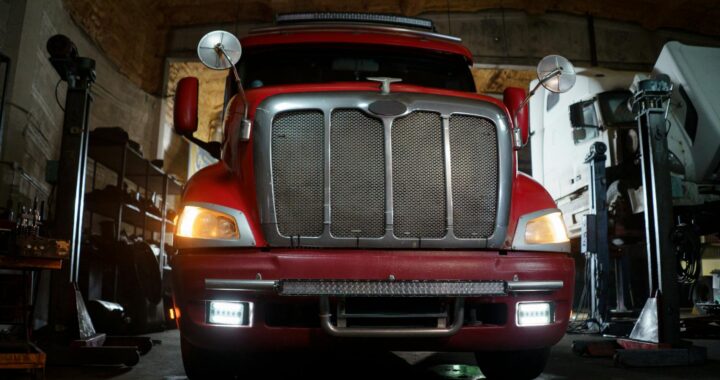
Effective Garage Ventilation Solutions for Large Diesel Trucks
Introduction
When you operate a garage that houses large diesel trucks, garage ventilation for diesel trucks isn’t just a convenience—it’s a safety and compliance requirement. Diesel engines produce high levels of carbon monoxide, nitrogen oxides, and particulate matter, which can accumulate quickly in an enclosed space. Proper ventilation protects mechanics, drivers, and the surrounding community while extending the life of your equipment. This guide walks you through the most reliable solutions, decision criteria, and common pitfalls, so you can design a system that meets U.S. regulations and real‑world performance needs.
Decision Criteria for Choosing Garage Ventilation for Diesel Trucks
Selecting the right system starts with a clear set of criteria. Below are the key factors you should evaluate before committing to a product or design.
- Airflow Requirements*: Calculate the required cubic feet per minute (CFM) based on the number of trucks, engine size, and typical idle time. A common rule of thumb is 100 CFM per horsepower of diesel engine operating simultaneously.
- Local Codes & OSHA Standards*: Verify that the system meets the Occupational Safety and Health Administration (OSHA) permissible exposure limits (PELs) for carbon monoxide (50 ppm) and nitrogen dioxide (5 ppm).
- Space Constraints*: Measure ceiling height, door dimensions, and existing ductwork pathways. High‑bay garages often need roof‑mounted exhaust fans with large diameter ducts.
- Energy Efficiency*: Look for variable‑speed motors and demand‑controlled ventilation (DCV) that adjusts airflow based on real‑time sensor data.
- Maintenance Accessibility*: Choose fans and filters that can be serviced without shutting down the entire garage.
- Noise Levels*: Consider acoustic enclosures or low‑speed fans if the garage is adjacent to office spaces or residential areas.
Checklist for Installing Effective Garage Ventilation
Follow this step‑by‑step checklist to ensure a thorough installation.
1. Perform a Ventilation Audit*
- Measure existing airflow with an anemometer.
- Record baseline pollutant concentrations using a handheld gas detector.
2. Define Target Air Changes per Hour (ACH)*
- For diesel garages, aim for 6–10 ACH depending on truck density.
3. Select the Fan Type*
- Axial Fans*: Good for low‑pressure, high‑volume applications.
- Centrifugal (Backward‑Curved) Fans*: Better for higher static pressure and quieter operation.
4. Design Ductwork Layout*
- Keep duct runs short and straight to minimize pressure loss.
- Use smooth‑walled metal ducts; avoid flexible ducting for main runs.
5. Integrate Sensors & Controls*
- Install CO, NO₂, and temperature sensors linked to a programmable logic controller (PLC).
- Enable automatic fan speed adjustments based on sensor thresholds.
6. Plan for Redundancy*
- Include a backup fan or power‑over‑ethernet (PoE) powered exhaust in case of primary system failure.
7. Verify Installation*
- Conduct a post‑installation airflow test.
- Re‑measure pollutant levels to confirm they are below OSHA limits.
8. Create a Maintenance Schedule*
- Clean or replace filters every 3–6 months.
- Inspect fan bearings and motor alignment quarterly.
Common Mistakes to Avoid
- Undersizing Fans*: Selecting a fan based solely on price can lead to inadequate airflow, causing hazardous buildup of exhaust gases.
- Ignoring Duct Leaks*: Even small gaps can reduce system efficiency by 10‑15 %.
- Static Sensors Only*: Relying on a single CO sensor can miss localized pockets of pollutants. Use a distributed sensor network.
- Skipping Noise Mitigation*: High‑speed fans can exceed 80 dB, creating a hostile work environment and potentially violating local noise ordinances.
- Neglecting Future Expansion*: Design ductwork with spare capacity for additional trucks or larger engines.
When to Consider Alternative Solutions
In some scenarios, traditional exhaust fans may not be the best fit.
- Limited Roof Access: If roof mounting is impossible, consider wall‑mounted high‑velocity fans* combined with sidewall louvers.
- Extreme Climate*: In very cold regions, heat‑recovery ventilators (HRVs) can reclaim energy while providing fresh air.
- Mobile Workshops*: Portable, battery‑powered fans with quick‑connect duct adapters offer flexibility for temporary setups.
Conclusion
Investing in the right garage ventilation for diesel trucks protects health, meets regulatory standards, and improves overall operational efficiency. By applying the decision criteria, following the installation checklist, and avoiding common mistakes, you can create a ventilation system that scales with your fleet and adapts to future needs.
@@DASH_LI_START@@–
Frequently Asked Questions
How often should I test the air quality in my diesel truck garage?*
- Conduct baseline testing during the initial setup, then perform spot checks monthly. If sensor alerts are triggered, run a full assessment within 24 hours.
What CFM rating is appropriate for a garage that services three 18‑wheel diesel trucks simultaneously?*
- Assuming each truck has a 500 hp engine, you would need roughly 100 CFM per hp, resulting in 150,000 CFM total. Split this across multiple fans for redundancy.
Can I use a standard residential exhaust fan for garage ventilation?*
- No. Residential fans are not designed for the high temperatures, particulate loads, and airflow volumes required for diesel exhaust.
Do I need a permit to install high‑capacity exhaust fans?*
- Most U.S. jurisdictions require a mechanical permit for ventilation systems exceeding a certain CFM threshold. Check with your local building department.
What maintenance tasks are most critical for keeping the system effective?*
- Regular filter replacement, fan blade cleaning, motor lubrication, and sensor calibration are the top priorities.
—
Editorial Note
This article is intended as practical planning guidance. Always verify product specifications, local codes, and site conditions before making final decisions.@@DASH_LI_END@@