
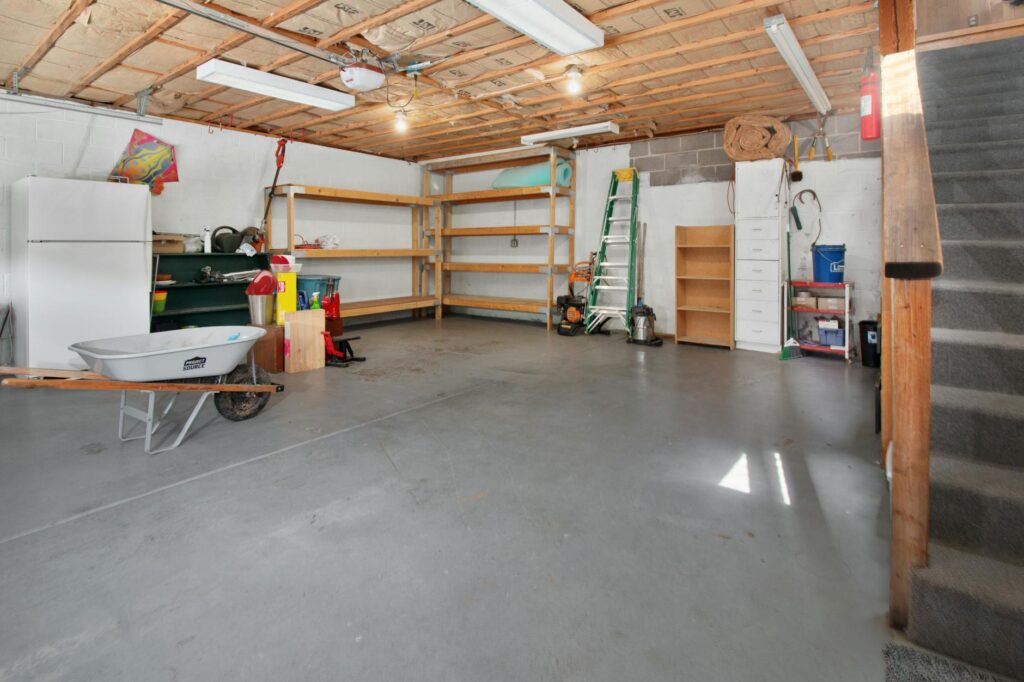
How to Accurately Calculate Garage Space for Any Vehicle: A Complete Guide
Finding the right garage size is more than a matter of curb appeal; it’s about safety, convenience, and protecting your investment. Whether you own a compact car, a full‑size SUV, a classic motorcycle, or a weekend boat trailer, a garage space calculator can turn guesswork into precise measurements. This guide walks you through the entire process—from gathering vehicle specs to applying local clearance rules—so you can design a garage that fits today’s needs and future projects.
@@DASH_LI_START@@–
Why a Garage Space Calculator Matters
A garage space calculator does three things:
1. Quantifies the footprint* of each vehicle, including mirrors, doors, and any attached accessories.
Skipping this step often leads to cramped interiors, damaged paint, or costly remodels. By treating the calculator as a planning tool, you get a realistic view of how much square footage you truly need.@@DASH_LI_END@@ @@DASH_LI_START@@–
Decision Criteria Before You Start Measuring
| Factor | What to Consider | Impact on Garage Size |
|---|---|---|
| Vehicle Type | Car, SUV, truck, motorcycle, trailer | Determines base footprint and height clearance |
| Number of Vehicles | Single, double, or multi‑car | Drives total width and length |
| Storage Needs | Workbench, shelving, seasonal gear | Adds square footage beyond vehicle footprint |
| Local Building Codes | Minimum setbacks, fire rating, egress | May require extra clearance around walls |
| Future Expansion | Anticipated new vehicle or hobby space | Adds a safety margin (usually 10‑15%) |
Use this table as a quick reference to decide how much flexibility you need before you input numbers into the calculator.@@DASH_LI_END@@ @@DASH_LI_START@@–
Using a Garage Space Calculator: Step‑by‑Step
2. Gather Vehicle Dimensions*
- Length, width, and height (including mirrors and roof racks).
- Door swing width (how far the driver’s side door opens).
- Turning radius if you plan to maneuver inside the garage.
3. Add Clearance Buffers*
- Side clearance:* Minimum 2‑3 ft on each side for door opening and walk‑around space.
- Front/Rear clearance:* At least 3‑4 ft to allow safe entry and exit.
- Height clearance:* Add 12‑18 in above the tallest point for roof clearance and ventilation.
4. Include Storage Footprint*
- Measure any permanent fixtures (workbench, cabinets) and add them to the total.
5. Apply Code Requirements*
- Check local zoning for minimum garage width (often 20 ft for a two‑car garage) and required egress windows.
6. Run the Calculator*
- Input the summed dimensions into the online garage space calculator of your choice.
- Review suggested garage width, depth, and height.
7. Validate with a Layout Sketch*
- Draw a scaled floor plan on graph paper or a digital tool.
- Verify that doors, windows, and storage fit without overlap.
8. Add a Safety Margin*
- Increase each dimension by 5‑10 % to accommodate future needs or measurement error.
> Pro tip: If you have multiple vehicles of different sizes, calculate each footprint separately, then combine the largest width and length requirements.@@DASH_LI_END@@ @@DASH_LI_START@@–
Checklist for Accurate Measurements
- [ ] Measure vehicle length from bumper to bumper.
- [ ] Measure vehicle width at the widest point (including mirrors).
- [ ] Record vehicle height to the roof or highest accessory.
- [ ] Note door swing width for each vehicle.
- [ ] Determine turning radius (use the manufacturer’s spec or a simple test drive).
- [ ] List all permanent storage items and their dimensions.
- [ ] Review local building code minimums for garage dimensions.
- [ ] Add a 5‑10 % buffer for future expansion.
- [ ] Run the numbers through a reputable garage space calculator.
- [ ] Sketch a scaled layout and double‑check clearances.
—
Common Mistakes and How to Avoid Them
| Mistake | Why It Happens | How to Fix It |
|---|---|---|
| Ignoring mirror width | Mirrors extend beyond the body width | Measure the full width with mirrors folded in, then add the mirror swing area separately |
| Forgetting door swing | Assuming the door opens outward only | Measure the interior clearance needed for the door to open fully |
| Overlooking height of roof racks | Racks add 6‑12 in to overall height | Include the highest point of any roof-mounted accessory |
| Using only interior dimensions | Not accounting for wall thickness or insulation | Add at least 2 in for interior wall finish and 4‑in for exterior siding |
| Skipping local code checks | Assuming a one‑size‑fits‑all rule | Consult the city’s building department or a licensed contractor |
By catching these pitfalls early, you save time, money, and frustration.@@DASH_LI_END@@ @@DASH_LI_START@@–
When to Consider Alternative Solutions
- Limited lot size: If the property footprint can’t accommodate the calculated dimensions, consider a carport, a detached garage, or a vertical lift system* for stacked storage.
- Multiple hobby spaces: For a workshop, a modular garage kit* can be expanded later without major structural changes.
- Budget constraints: A prefabricated garage* may offer standard dimensions that are close enough, reducing custom build costs.
- Historic neighborhoods: Some districts have strict façade guidelines; a garage conversion* (e.g., turning a basement or attic into a garage) might be the only viable path.
Evaluate each alternative against the checklist above to ensure you still meet clearance and safety standards.@@DASH_LI_END@@ @@DASH_LI_START@@–
Frequently Asked Questions (FAQ)
What is the minimum width for a two‑car garage in the U.S.?*
Most building codes recommend at least 20 ft of clear width, but larger vehicles may require 22‑24 ft.
Do I need extra height for a vehicle with a roof rack?*
Yes. Add at least 12 in above the highest point of the rack to allow for ventilation and safe door operation.
Can I use a smartphone app as a garage space calculator?*
Many apps provide accurate measurements, but verify that they let you add custom clearance buffers and storage items.
How much extra space should I leave for future vehicles?*
A 10 % increase on the total calculated dimensions is a practical rule of thumb.
Are there any universal standards for garage door clearance?*
The International Residential Code (IRC) suggests a minimum of 3 ft of clearance on each side of the door opening.@@DASH_LI_END@@ @@DASH_LI_START@@–
Conclusion
A reliable garage space calculator is the cornerstone of any successful garage project. By systematically measuring your vehicle(s), adding realistic clearance buffers, and respecting local building codes, you can design a garage that protects your assets and enhances daily convenience. Use the checklist, avoid common pitfalls, and keep a modest safety margin to future‑proof your investment. When you follow this complete guide, the final result will be a garage that feels spacious, functional, and ready for whatever you decide to store inside.@@DASH_LI_END@@ @@DASH_LI_START@@–
Editorial Note
This article is intended as practical planning guidance. Always verify product specifications, local codes, and site conditions before making final decisions.@@DASH_LI_END@@ @@DASH_LI_START@@–
Author Bio
Written by the editorial team, with a focus on practical planning, clear homeowner guidance, and SEO-friendly educational content.@@DASH_LI_END@@
